When Being “Healthy” Becomes A Problem: How To Handle Bullying Around Your Wellness Choices?

We often talk about bullying in obvious forms. Name-calling, public humiliation, or aggressive behaviour. But there is a quieter kind of bullying that many people experience and struggle to name. It shows up as jokes, side comments, eye rolls, and constant reminders that you are “too healthy.”
- “You never eat anything fun.”
- “Relax, one drink won’t kill you.”
- “You’re obsessed with fitness.”
- “Live a little.”
On the surface, these comments sound harmless. Sometimes they are even framed as concern or humour. But when they repeat over time, they can chip away at confidence and create shame around choices that are actually supporting your wellbeing.
If you have ever felt guilty, isolated, or defensive simply because you care about your health, this conversation is for you.
Also Read: Health Mistakes People Might Still Be Making In 2025!
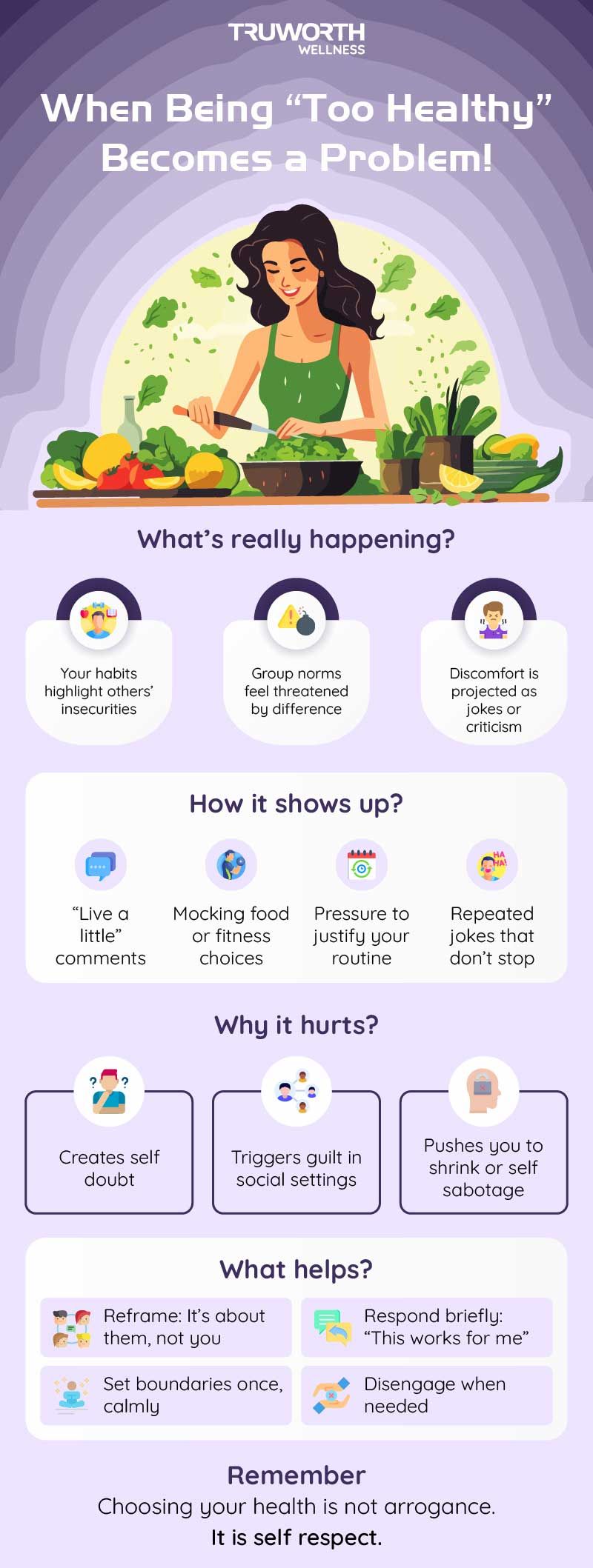
Why do people react negatively to healthy choices?
Understanding the root of the behaviour helps you stop internalising it.
For many people, health is emotional. It is tied to guilt, fear, comparison, and unresolved struggles with their own habits. When someone consistently makes choices that feel disciplined or mindful, it can unintentionally trigger discomfort in others.
This reaction is rarely about you.
It may stem from insecurity, where your choices highlight what they wish they were doing differently. It may come from group dynamics, where anything that breaks the norm feels threatening. Or it may come from defensiveness, where humour is used to mask discomfort.
Healthy choices act like a mirror. Not everyone likes what they see reflected back.
When comments turn into bullying
Not every comment is bullying, but there is a clear line.
It becomes bullying when:
- You are repeatedly mocked or singled out
- Your choices are discussed even after you have expressed discomfort
- You feel pressured to justify your habits
- The comments affect your self-esteem or social comfort
Being told you are “too healthy” over and over again sends an underlying message that your self-care is inconvenient, excessive, or socially unacceptable.
That message is false, but it can still hurt.
Also Read: Adult Bullying In The Corporate World: How Can Wellness Programs Make A Real Difference?
The emotional toll of wellness shaming
Wellness shaming can be confusing because it contradicts what society claims to value. We are constantly told to eat better, move more, manage stress, and prioritise health. Yet when someone actually does these things consistently, they can face resistance.
Over time, this can lead to:
- Self-doubt around personal routines
- Guilt during social situations
- Emotional exhaustion from constant explanation
- The urge to dim your habits to fit in
Some people even begin to self-sabotage, not because they want to, but because belonging starts to feel more important than wellbeing.
This is where the real harm lies.
Reframing the narrative in your own mind
Before dealing with others, it is important to address what happens internally.
Instead of asking, “Am I doing too much?”
Ask, “Is this supporting my physical and mental health?”
Instead of thinking, “I am making others uncomfortable.”
Remind yourself, “Discomfort does not equal wrongdoing.”
Your habits do not need to look normal to others to be right for you. Health is personal. Bodies, energy levels, and emotional needs vary.
Once you stop questioning yourself, the external noise loses power.
How to respond without over-explaining?
One of the most common traps people fall into is over-explaining their choices. This often invites debate and permits others to keep commenting.
Short, calm responses work best.
You can say:
- “This works well for me.”
- “I feel better when I do this.”
- “I have figured out what suits my body.”
These statements are not defensive. They are factual.
If the comments continue, it is okay to set a boundary.
“I would prefer not to have my health choices discussed.”
“I do not comment on your habits, and I expect the same.”
Boundaries do not need justification. They need consistency.
Choosing when not to engage
Not every comment deserves a response.
Sometimes silence is a form of self-respect. Changing the topic, stepping away, or redirecting the conversation sends a clear message without confrontation.
You are not obligated to educate, convince, or convert anyone. Your responsibility is to your wellbeing, not their comfort.
Learning when to disengage is an emotional skill, not avoidance.
Also Read: Non-Negotiable Self-Care At The Workplace
Navigating wellness shaming at work
In professional environments, wellness-related comments often hide behind humour or “team culture.”
If colleagues constantly comment on your food, exercise routine, or lifestyle choices, it can affect your sense of safety at work.
What helps?
- Keeping responses neutral and minimal
- Avoiding personal disclosures with unsafe audiences
- Aligning with one supportive colleague
- Documenting repeated behaviour if it begins to affect your mental health
A workplace that values well-being must also respect personal boundaries around it.
You do not need to shrink to belong
One of the hardest truths to accept is this: not everyone will be comfortable with your growth.
Health changes routines. It changes conversations. Sometimes it even changes relationships.
If being healthy makes you stand out, that does not mean you are doing something wrong. It means you are choosing yourself.
Belonging should not require self-abandonment.
A final reminder worth holding onto
Being healthy does not make you rigid.
It does not make you judgmental.
It does not make you boring.
Also Read: How Do We Truly Desire A Workplace To Be? (If There Were No Judgments?)
It makes you self-aware.
And if that triggers others, it is not your burden to carry.
Protecting your health is not a trend or a performance. It is a relationship with yourself. That relationship deserves respect, especially from you.