Can Your Cafeteria Pass A Wellness Test? Why Food Audits Are No Longer Optional
Corporate wellness conversations often focus on mental health workshops, step challenges, or leadership well-being programs. Yet, one of the most powerful determinants of employee health sits quietly on campus every single day, the office cafeteria.
What employees eat at work directly affects their energy levels, focus, digestion, mood, metabolic health, and long-term disease risk. And still, many organizations treat the cafeteria as a logistics function rather than a wellness lever.
This is where cafeteria audits step in, not as a compliance checkbox, but as a strategic wellness tool.
Today, the question every organization must ask is simple.
Can your cafeteria pass a wellness test?
The Workplace Cafeteria: More Than Just A Meal Stop
For many employees, especially in large offices, tech parks, factories, and corporate campuses, at least one to two meals a day are consumed at work. Over a year, that adds up to hundreds of meals influencing:
- Blood sugar stability
- Gut health and digestion
- Energy crashes and afternoon fatigue
- Weight gain or metabolic issues
- Immunity and inflammation
An unhealthy cafeteria does not just affect individuals. It quietly shows up as lower productivity, higher sick leaves, frequent digestive complaints, and even long-term health claims.
Yet, most organizations only audit cafeterias for hygiene and food safety, not for nutritional quality or wellness impact.
Also Read: The Hidden Link Between Employee Productivity And Gut Health
What Is a Cafeteria Audit From a Wellness Lens?
A wellness-focused cafeteria audit goes beyond checking cleanliness or vendor compliance. It evaluates whether the food environment actually supports employee health.
Key areas typically assessed include:
- Menu balance, proportion of vegetables, whole grains, proteins, and ultra-processed foods
- Cooking methods, deep-frying frequency, excessive oil use, reheating practices
- Sugar and salt load, hidden sugars in beverages, desserts, gravies, and condiments
- Portion sizes, overloaded plates that encourage overeating
- Food timing suitability, heavy lunches that trigger post-meal lethargy
- Special dietary needs, availability of gut-friendly, diabetic-friendly, or heart-healthy options
- Labeling and nudges, whether employees can make informed choices
In short, it answers one critical question.
Is this cafeteria helping employees feel better after eating or worse?
Cafeteria Wellness Audit
Sample Questionnaire With Scoring
| No. | Audit Question | Yes (1) | No (0) |
|
|---|---|---|---|
| Menu & Variety | |||
| 1 | Vegetables included in every main meal | ⬜ | ⬜ |
| 2 | Whole grains or millets offered regularly | ⬜ | ⬜ |
| 3 | Clear protein options in each meal | ⬜ | ⬜ |
| 4 | Menu variety maintained across the week | ⬜ | ⬜ |
| Cooking Methods | |||
| 5 | Low-oil cooking methods followed | ⬜ | ⬜ |
| 6 | Deep-fried foods limited to specific days | ⬜ | ⬜ |
| 7 | Reheating of food minimized | ⬜ | ⬜ |
| 8 | Excess oil removed before serving | ⬜ | ⬜ |
| Sugar & Salt Control | |||
| 9 | Sugary beverages limited or avoided | ⬜ | ⬜ |
| 10 | Desserts served in controlled portions | ⬜ | ⬜ |
| 11 | Salt usage monitored during cooking | ⬜ | ⬜ |
| 12 | Condiments provided separately | ⬜ | ⬜ |
| Portion & Balance | |||
| 13 | Portion sizes standardized | ⬜ | ⬜ |
| 14 | Light and heavy meal options available | ⬜ | ⬜ |
| 15 | Plate overloading discouraged | ⬜ | ⬜ |
| Digestive & Energy Impact | |||
| 16 | Employees feel energetic post lunch | ⬜ | ⬜ |
| 17 | Digestive complaints are minimal | ⬜ | ⬜ |
| 18 | Light lunch options available daily | ⬜ | ⬜ |
| Special Dietary Needs | |||
| 19 | Diabetic-friendly options available | ⬜ | ⬜ |
| 20 | Gut-friendly or low-spice meals offered | ⬜ | ⬜ |
| 21 | Veg and non-veg options balanced | ⬜ | ⬜ |
| Information & Feedback | |||
| 22 | Food items clearly labeled | ⬜ | ⬜ |
| 23 | Healthier choices highlighted visually | ⬜ | ⬜ |
| 24 | Employee feedback collected regularly | ⬜ | ⬜ |
Scoring Guide
Total Questions: 24
Score 1 for each “Yes”
Score 0 for each “No”
Wellness Score Interpretation
0–8 | High Risk
Your cafeteria environment is likely contributing to low energy, digestive discomfort, and unhealthy eating patterns among employees. Immediate intervention is required to address food quality, cooking methods, and menu balance. Without changes, wellness initiatives may have limited impact.
9–16 | Moderate
Your cafeteria has some positive elements, but inconsistencies remain. Certain food choices may support wellbeing, while others may be causing fatigue or health concerns. Focused improvements in menu planning, portion control, and food preparation can significantly enhance employee health outcomes.
17–24 | Strong Foundation
Your cafeteria is largely aligned with wellness goals and supports employee energy and overall health. With small refinements, such as better labeling, variety, and awareness, it can become a model wellness-driven food environment.
Note: This is a sample cafeteria audit questionnaire intended for general reference only. For a more comprehensive and effective assessment, it is recommended to consult a wellness professional who can design a customized cafeteria audit aligned with your organization’s size, workforce needs, culture, and health goals.
Why Food Audits Are No Longer Optional?
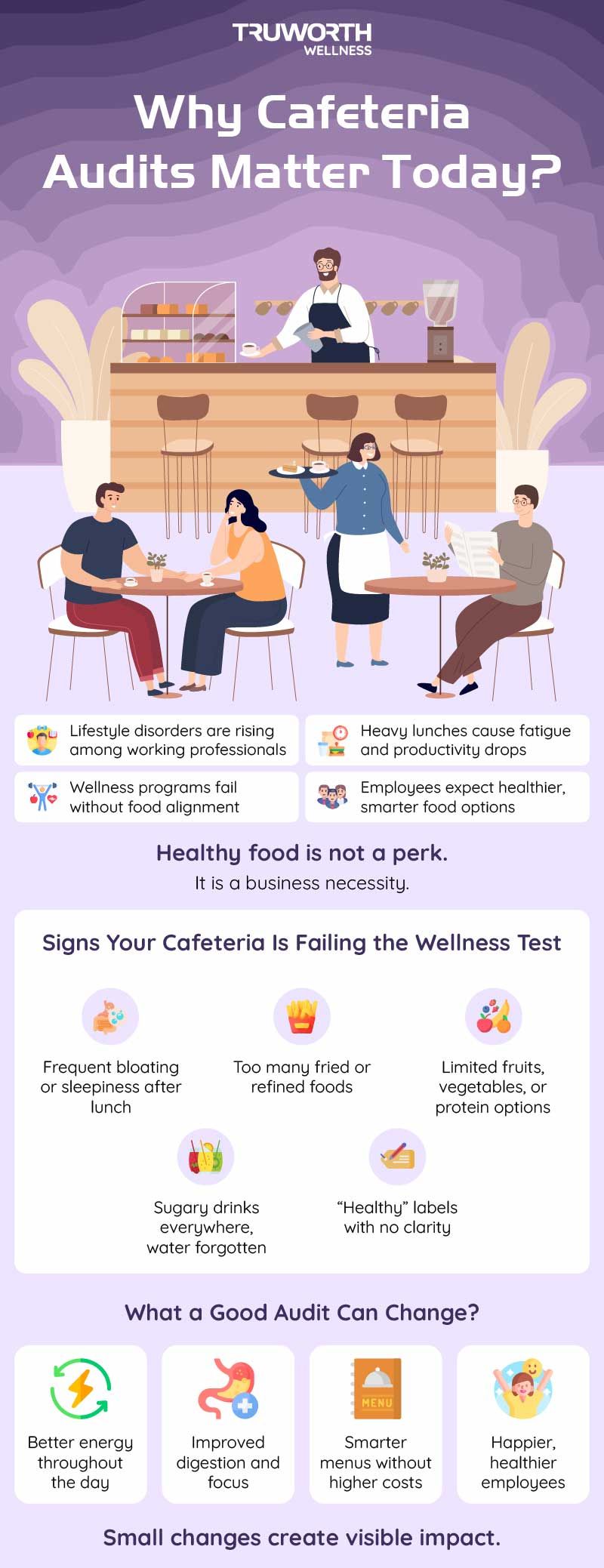
1) Rising Lifestyle Disorders Among The Working Population
India is seeing a sharp rise in diabetes, obesity, fatty liver, acidity, and hormonal imbalances, especially among young professionals. Office food plays a significant role in this trend.
Ignoring cafeteria quality today means paying the price in health risks tomorrow.
Also Read: Managing Diabetes At Workplace
2) Energy And Focus Are Business Outcomes
Heavy, oil-laden lunches and sugar-spiked beverages lead to predictable afternoon crashes. Employees may still be present at their desks, but cognitive performance drops.
A wellness-aligned cafeteria improves sustained energy, alertness, and decision-making, outcomes every organization cares about.
3) Employees Are More Aware And More Vocal
Today’s workforce is far more nutrition-aware. Employees notice when cafeterias overuse oil, repeat unhealthy menus, or ignore dietary needs. Poor food options quietly impact morale and trust.
A food audit signals that the organization genuinely cares.
4) Wellness Programs Fail Without Food Alignment
No amount of yoga sessions or step challenges can offset a cafeteria that promotes unhealthy eating daily. Without food alignment, wellness initiatives lose credibility.
Signs Your Cafeteria May Be Failing The Wellness Test
If any of these sound familiar, a cafeteria audit is overdue:
- Employees complain of bloating, acidity, or sleepiness after lunch
- Fried items and refined carbs dominate the menu
- Fruits, salads, and protein options feel like an afterthought
- Sugary beverages are easier to access than water or buttermilk
- “Healthy” labels exist, but lack clarity or consistency
- There is no data on what employees are actually consuming
These are not minor issues. They are early warning signs.
What A Strong Cafeteria Audit Can Transform?
A well-executed audit does not aim to eliminate comfort food or cultural favorites. Instead, it focuses on smart moderation and better defaults.
Real, visible improvements often include:
- Rebalancing menus without increasing cost
- Introducing lighter cooking methods without sacrificing taste
- Reducing hidden sugars and excess oil
- Improving food variety across the week
- Supporting digestion and energy rather than suppressing it
- Empowering employees to make better choices without force
The result is that employees feel the difference within weeks, not months.
Cafeteria Audits in the Indian Corporate Context
India’s food culture is rich, diverse, and deeply emotional. Imported Western wellness cafeteria models often fail because they ignore local eating habits.
Effective cafeteria audits in India respect:
- Regional food preferences
- Vegetarian-dominant populations
- Spice tolerance and digestion
- Cultural comfort foods
The goal is not salads for everyone. It is balanced Indian meals that nourish rather than drain.
From Compliance To Care: A Shift In Thinking
The most progressive organizations are shifting from asking,
“Is our cafeteria compliant?”
To asking,
“Is our cafeteria contributing to our employees’ long-term wellbeing?”
That shift makes all the difference.
Final Thought: Wellness Begins on the Plate
Your cafeteria feeds your workforce more consistently than any wellness campaign ever will.
If organizations are serious about reducing fatigue, improving engagement, and supporting employee health, cafeteria audits are no longer optional. They are foundational.
Because true corporate wellness does not start in the boardroom.
It starts on the plate.
How Truworth Wellness Can Help?
At Truworth Wellness, we view cafeteria audits as a strategic wellness intervention, not a food checklist. Our approach blends nutrition science, behavioral insights, and Indian workplace realities to help organizations build cafeterias that truly support employee wellbeing.
When food aligns with wellness goals, everything else works better.