What Happens When You Eat Something Sweet Before Bed?

Late-night sweet cravings are extremely common, especially among working professionals. After a long day of meetings, deadlines, commuting, and screen exposure, many people reach for a dessert, chocolate, biscuit, or sweet snack before going to sleep. It often feels like a small reward at the end of a stressful day.
Occasional indulgence is completely normal. However, regularly eating sugary foods right before bedtime can influence sleep quality, digestion, metabolism, and next-day energy levels.
For organizations that care about employee health and productivity, even small daily habits such as late-night snacking can make a noticeable difference. Understanding what happens inside the body after consuming sugar at night can help individuals make more mindful choices.
Also Read: Calm Your Sugar Craving With These 5 Healthy Foods
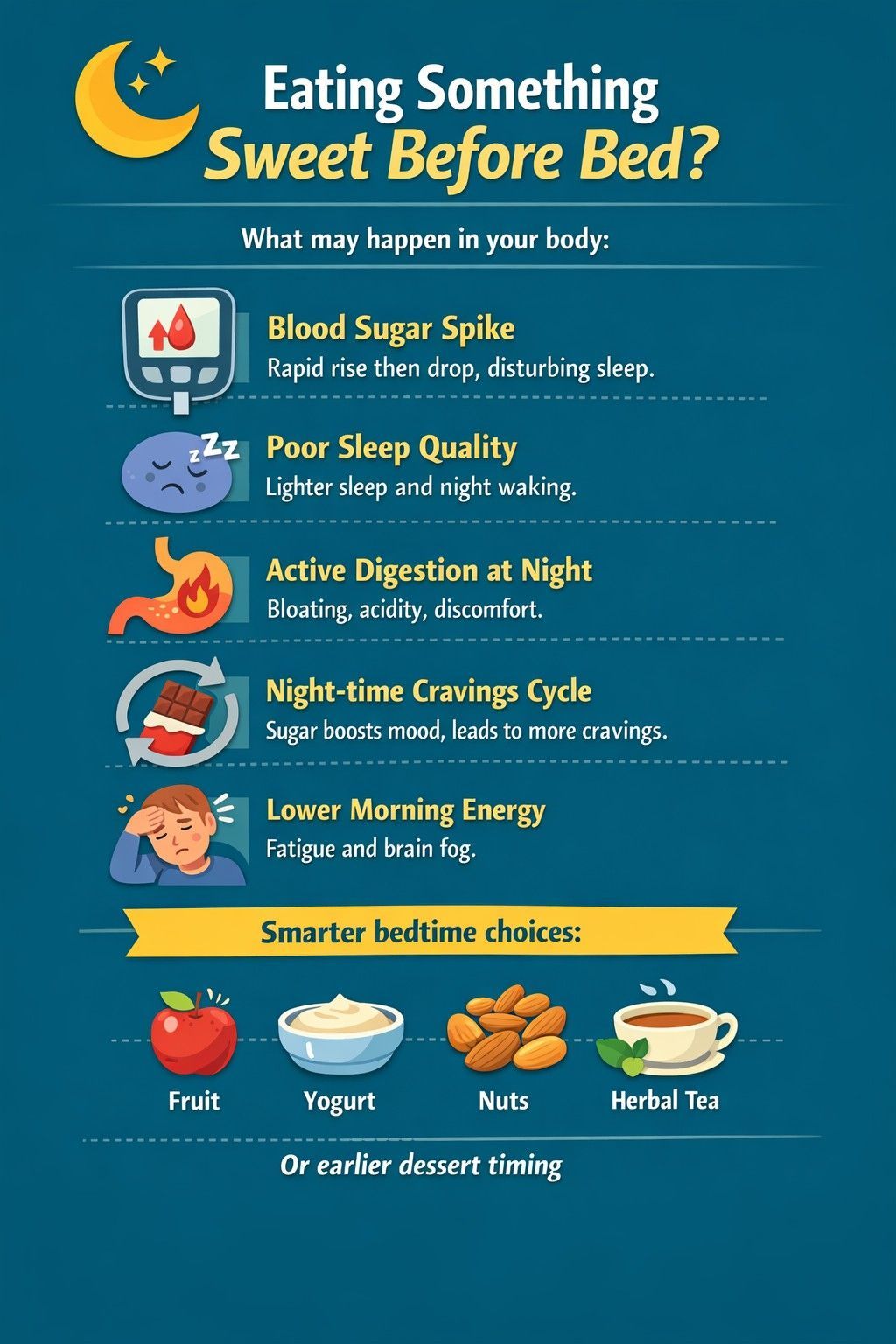
Why Sweet Cravings Often Appear At Night?
Many people assume night-time sugar cravings are caused by hunger. In reality, they are often triggered by fatigue, stress, and emotional exhaustion.
During the day, busy schedules may prevent people from eating balanced meals. When the body does not receive adequate nutrients, cravings tend to appear later in the evening. In other cases, the brain simply looks for a quick source of comfort after a mentally demanding day.
Sugary foods stimulate the release of dopamine, a neurotransmitter associated with pleasure and reward. This is why sweets often feel comforting in the moment. However, the effect is temporary and can sometimes create a cycle of repeated cravings.
Blood Sugar Spikes And Night-Time Disruption
One of the immediate effects of consuming sweets before bed is a rapid rise in blood sugar levels. Foods that contain refined sugar or simple carbohydrates are quickly absorbed by the body.
In response, the pancreas releases insulin to bring blood glucose levels back down. This sudden rise and fall can disrupt the body’s natural overnight metabolic balance.
As a result, individuals may experience:
- Restless or fragmented sleep
- Sudden waking during the night
- Feeling hungry early in the morning
- Low energy levels the next day
Also Read: The Hidden Sleep Disorder Sabotaging Top Performers
When this pattern occurs frequently, it can affect daily performance, especially for professionals who need consistent concentration and mental clarity.
The Link Between Sugar And Sleep Quality
Sleep is regulated by the body’s circadian rhythm and hormones such as melatonin. Eating high-sugar foods late at night can interfere with these natural processes.
Some research suggests that diets high in sugar are associated with lighter and less restorative sleep cycles. Instead of entering deep sleep stages that allow the body to repair and recover, individuals may remain in lighter sleep phases.
Poor sleep quality can lead to several workplace challenges, including:
- Reduced focus and attention span
- Slower decision making
- Irritability and mood fluctuations
- Higher levels of fatigue during the workday
In corporate environments where productivity and cognitive performance are important, maintaining healthy sleep patterns becomes essential.
Digestion Slows Down During Sleep
The digestive system naturally slows down when the body prepares for sleep. When sugary or heavy foods are consumed right before bedtime, the digestive system is forced to remain active longer.
This can lead to discomfort such as:
- Bloating
- Acid reflux or heartburn
- Night-time gas or indigestion
- Disturbed sleep due to digestive activity
Many individuals who experience digestive discomfort at night may not immediately connect it to their late-night eating habits.
Also Read: Experiencing Digestive Issues At Work? Here's What To Do?
Can Eating Sweets Before Bed Lead To Weight Gain?
Eating sweets at night does not automatically cause weight gain. However, frequent late-night snacking can increase the risk over time, especially when combined with sedentary lifestyles.
At night, the body’s energy requirements are lower because physical activity is minimal. When excess calories from sugary foods are consumed, they are less likely to be used immediately for energy.
Over time, this pattern may contribute to:
- Gradual weight gain
- Increased risk of metabolic concerns
- Lower overall energy levels
For employees who spend long hours sitting at desks, maintaining balanced eating habits becomes even more important.
The Stress Eating Connection
Another important factor behind late-night sugar consumption is stress. High workloads, deadlines, and mental fatigue can trigger emotional eating behaviours.
Sugar provides a quick psychological boost, which explains why people often crave sweets after stressful days. However, the relief is short-lived. Once blood sugar levels drop again, fatigue and cravings can return.
Recognizing the difference between physical hunger and emotional cravings is a valuable step toward building healthier habits.
Also Read: The Psychology Of Deadlines: Turning Stress Into Motivation Without Burnout
Healthier Ways To Handle Late-Night Sweet Cravings
Completely eliminating sweets is rarely necessary. Instead, small adjustments can help manage cravings without disrupting sleep or metabolic health.
Here are a few practical strategies:
- Choose natural sweetness: Fruits such as bananas, apples, or berries provide natural sugars along with fiber and nutrients.
- Avoid heavy desserts right before sleep: If you want to enjoy something sweet, try consuming it earlier in the evening instead of immediately before bedtime.
- Stay hydrated: Sometimes cravings appear due to mild dehydration. Drinking water or herbal tea may reduce the urge to snack.
- Build balanced meals during the day: Meals that contain protein, healthy fats, and complex carbohydrates can prevent sudden energy crashes that lead to night-time cravings.
- Develop a calming bedtime routine: Activities such as stretching, reading, or short mindfulness exercises can help reduce stress-driven eating habits.
Why Corporate Wellness Programs Should Address Lifestyle Habits?
Employee wellbeing is shaped not only by workplace policies but also by everyday lifestyle choices. Sleep patterns, evening routines, and nutrition habits directly influence how people feel and perform during the day.
Organizations that invest in wellness initiatives often see improvements in energy levels, engagement, and productivity. Providing guidance on sleep hygiene, mindful eating, and stress management can help employees make sustainable lifestyle changes.
When individuals are better rested and healthier, both employees and organizations benefit.
Supporting Healthier Habits Through Truworth Wellness
Developing healthier routines requires awareness, education, and access to the right support systems. Truworth Wellness helps organizations create a culture of preventive health through integrated wellness programs and digital health platforms.
Through The Wellness Corner app, employees can access tools that support healthier lifestyle decisions, including:
- Expert nutrition guidance for balanced eating habits
- Doctor consultations for health concerns
- Guided mindfulness and relaxation sessions
- Health assessments and personalized wellness insights
These resources help employees understand how habits such as late-night snacking, poor sleep routines, and stress eating affect overall health.
Final Thoughts
Eating something sweet before bed occasionally is unlikely to cause harm. However, when it becomes a daily habit, it can affect sleep quality, digestion, metabolic balance, and next-day energy levels.
For busy professionals, small lifestyle changes can have a powerful impact. Being mindful of evening eating patterns is one step toward better sleep, improved focus, and long-term wellbeing.
By combining awareness, balanced nutrition, and supportive wellness resources, individuals can build routines that benefit both their personal health and professional performance.
Frequently Asked Questions (FAQs)
1) Is it bad to eat sweets before going to bed?
Eating sweets occasionally before bed is generally not harmful. However, regularly consuming sugary foods late at night may disrupt sleep quality, cause blood sugar fluctuations, and contribute to digestive discomfort. Over time, this habit may also affect energy levels and metabolic health.
2) Can eating sugar before bed affect sleep?
Yes, consuming high-sugar foods close to bedtime can interfere with sleep. Sugar may cause spikes and drops in blood glucose levels, which can lead to restless sleep, frequent waking, and difficulty entering deeper sleep stages that are important for recovery.
3) Does eating sweets at night lead to weight gain?
Weight gain does not occur from a single late-night snack. However, frequent consumption of high-calorie sugary foods before sleep can increase the risk of gradual weight gain, especially if overall calorie intake exceeds the body’s daily energy needs.
4) Why do people crave sweets at night?
Night-time sugar cravings are often linked to fatigue, stress, or unbalanced meals during the day. When the body or brain is tired, it seeks quick sources of energy and comfort, which makes sugary foods particularly appealing.
5) What are healthier alternatives to sweets before bed?
Healthier options include fruits, yogurt, nuts, or herbal tea. These choices provide nutrients and may satisfy cravings without causing sharp spikes in blood sugar levels.
6) How can I stop late-night sugar cravings?
You can reduce cravings by eating balanced meals during the day, staying hydrated, managing stress, and creating a relaxing bedtime routine. Ensuring adequate sleep and regular meal timing also helps regulate hunger signals.