Obesity Is Rising And So Are Employer Costs. What Can Be Done?

Obesity is no longer a future risk. It is a present-day business reality. Across industries and geographies, employers are experiencing rising healthcare expenses, declining productivity, and growing strain on employee well-being. While obesity is often discussed as an individual health issue, the data clearly shows that it is also an organizational and economic challenge.
Ignoring it is costly. Addressing it strategically can change outcomes for both employees and employers.
Also Read: How Obesity Affects Your Body?
The Scale Of The Problem
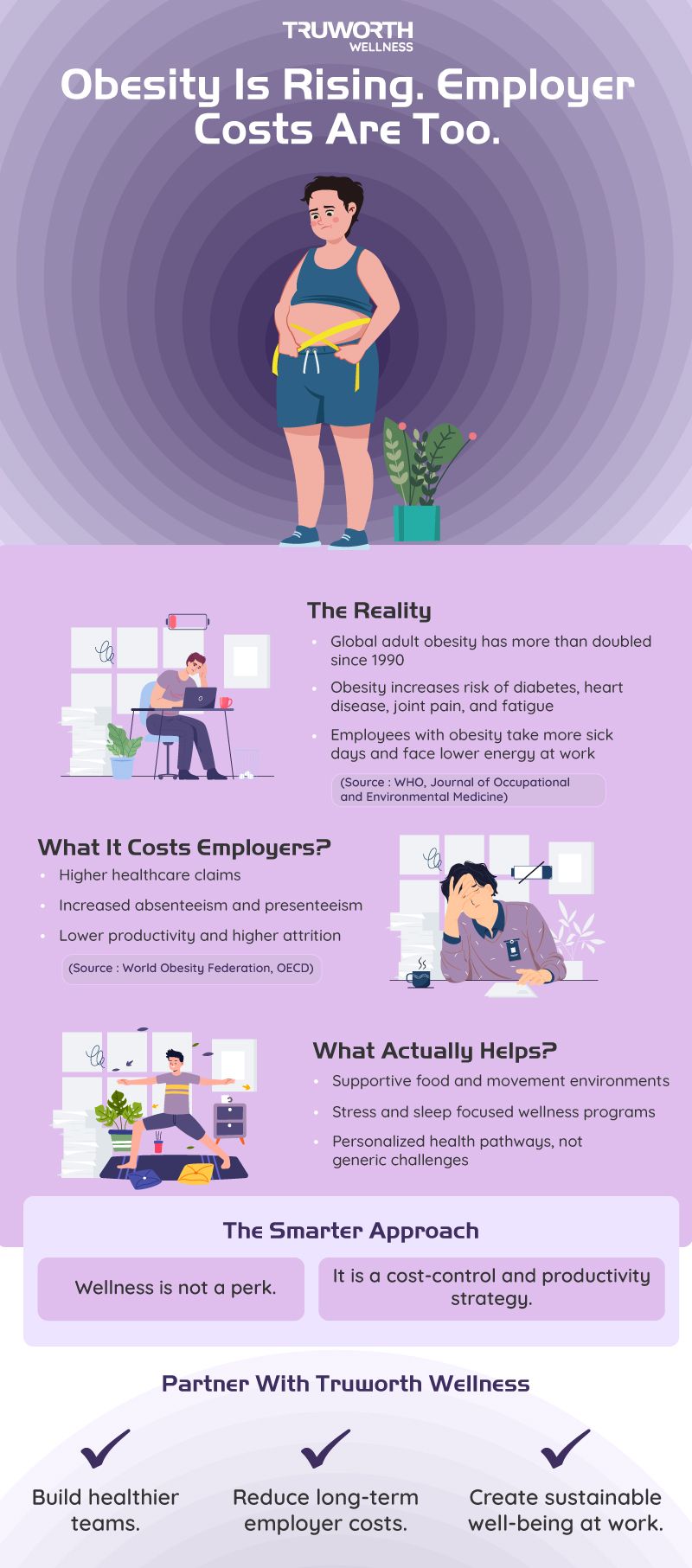
According to the World Health Organization, global obesity rates have nearly tripled since 1975. Today, more than 1 billion people worldwide are living with obesity. This is not confined to any one country, income group, or industry. Sedentary work environments, prolonged screen time, irregular eating patterns, chronic stress, and sleep deprivation have become common features of modern work life.
From an employer standpoint, obesity rarely exists in isolation. It increases the risk of non-communicable diseases such as type 2 diabetes, cardiovascular disease, musculoskeletal disorders, and certain cancers. These conditions contribute to sustained healthcare costs rather than one-time medical events.
The World Obesity Federation estimates that the global economic impact of overweight and obesity could exceed 4 trillion USD annually by 2035 if current trends continue. This figure includes direct healthcare spending and indirect costs such as reduced productivity and early workforce exit.
Why Employer Costs Are Rising?
Employer costs linked to obesity typically fall into four interconnected areas.
- Healthcare expenditure: Employees living with obesity tend to have higher rates of doctor visits, medication use, diagnostic testing, and long-term treatment for chronic conditions. Over time, this leads to rising insurance premiums and higher claims ratios.
- Absenteeism: Research published in journals such as The Journal of Occupational and Environmental Medicine shows higher rates of sick leave among employees with obesity, particularly when joint pain, fatigue, or metabolic conditions are present.
- Presenteeism: Presenteeism often costs more than absenteeism. Employees may be physically present but experience low energy, reduced concentration, and discomfort that limits their performance. Presenteeism is as a hidden but significant driver of productivity loss.
- Disability and attrition: Obesity-related complications can increase the likelihood of disability claims and early exit from the workforce, leading to higher replacement and retraining costs.
Together, these factors create a compounding financial effect that traditional benefits alone cannot resolve.
Why Awareness Campaigns Are Not Enough?
Many organizations respond to rising obesity by launching awareness initiatives. Posters, step challenges, one-off health talks, or generic fitness campaigns are common. While well-intentioned, these approaches often fail to produce sustained outcomes.
Research consistently shows that obesity is influenced by biological, psychological, social, and environmental factors. Knowledge alone does not drive behavior change. Employees may know what is healthy but struggle to apply it due to workload pressure, time scarcity, stress, or lack of support.
From a corporate wellness research lens, the question is not whether employees know what to do. It is whether the workplace enables them to do it consistently.
What Actually Works For Employers?
Addressing obesity at work requires moving from surface-level programs to systemic change. Evidence points to several strategies that deliver more sustainable impact.
Designing Health-Enabling Work Environments
The workplace itself shapes daily habits. Employers can influence health without policing behavior by redesigning systems.
Examples include:
- Access to balanced meal options rather than default high-calorie convenience foods
- Encouraging movement through flexible breaks, walkable layouts, and active meeting formats
- Ergonomic design that reduces pain and fatigue, making physical activity more achievable
- Environmental support reduces reliance on willpower and increases participation across diverse employee groups.
Also Read: Eating Mindfully: Simple Tips To Transform Your Meals
Addressing Stress And Sleep, Not Just Diet And Exercise
Chronic stress and sleep deprivation are strongly linked to weight gain through hormonal and metabolic pathways. The WHO and multiple global health bodies recognize stress as a key risk factor for obesity.
Employers that focus only on calories and steps miss a major driver of the problem. Effective programs integrate:
- Stress regulation practices
- Sleep hygiene education and behavior support
- Workload and recovery balance
When nervous system health improves, lifestyle change becomes more sustainable.
Moving From Weight Focus To Metabolic And Functional Health
Weight alone is a limited metric. Research increasingly emphasizes metabolic markers, energy levels, mobility, and functional capacity.
Programs that focus on improving daily functioning, stamina, digestion, and mental clarity often see better engagement than those centered on weight loss targets. This also reduces stigma, which is a major barrier to participation.
Also Read: 10 Easy Ways To Rev Up Your Metabolism
Personalization Over One-Size-Fits-All
Global studies published in The Lancet and Nature Medicine highlight that individuals respond differently to the same interventions. Personalized coaching, adaptive programs, and segmented risk pathways significantly improve outcomes.
From an employer lens, personalization does not mean complexity. It means offering flexible pathways rather than rigid programs.
Leadership And Culture Alignment
When leadership models healthy boundaries, takes recovery seriously, and participates in wellness initiatives, employee engagement rises. Culture signals matter more than policies.
A culture that rewards overwork while promoting wellness messages creates cognitive dissonance. Sustainable obesity prevention requires alignment between performance expectations and well-being values.
Measuring What Matters
Traditional wellness metrics such as participation rates are insufficient. Progressive employers track:
- Energy and fatigue levels
- Self-reported quality of life
- Stress and sleep indicators
- Functional movement and pain reduction
- Healthcare utilization trends over time
These metrics align more closely with productivity and cost outcomes.
Where Truworth Wellness Comes In?
At Truworth Wellness, we approach obesity not as an individual failure but as a system-level challenge shaped by modern work life.
Our corporate wellness programs are designed through a research-backed, human-centered lens. We help organizations move beyond awareness to measurable change by:
- Designing integrated wellness strategies that address nutrition, movement, stress, sleep, and behavior change together
- Offering personalized employee pathways rather than generic programs
- Supporting leadership and culture transformation so wellness is embedded, not added on
- Tracking outcomes that matter to both health and business performance
Our goal is not short-term weight loss challenges. It is long-term workforce resilience, reduced health risk, and sustainable cost control.
A Strategic Imperative, Not A Perk
Obesity will continue to rise if workplaces remain unchanged. For employers, the question is no longer whether to act, but how intentionally and how effectively.
Organizations that invest in evidence-based, culturally relevant wellness strategies will not only reduce costs but also build healthier, more engaged teams.
If your organization is ready to move from reactive healthcare spending to proactive well-being design, Truworth Wellness is ready to partner with you.
Because when employee health improves, business outcomes follow.