How To Close The "Active Couch Potato" Gap In Corporate Wellness?
Many companies today care deeply about the health of their workers. To help their teams stay fit, business leaders provide excellent benefits like gym discounts, fitness allowances, and sports club memberships. These benefits are fantastic initiatives. They show that an employer cares about their people, they help build a great company culture, and they allow motivated employees to build strong, healthy bodies.
However, new health studies show a hidden problem in modern office life. It is a unique challenge that traditional gym memberships alone cannot fix.
Wellness experts call this the "Active Couch Potato" syndrome.
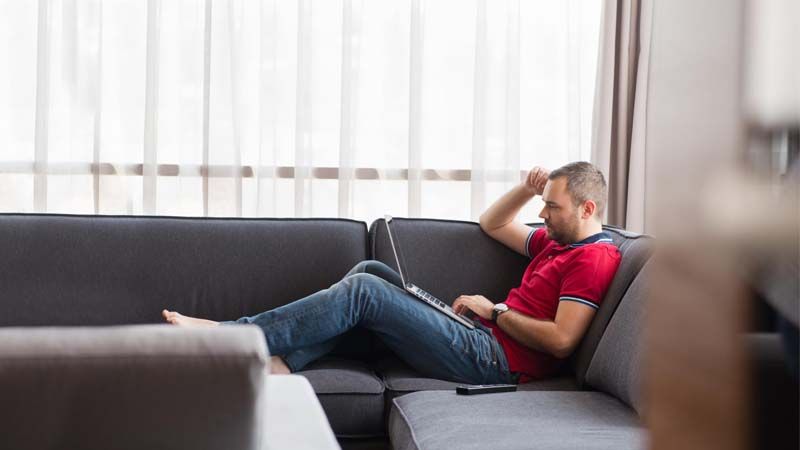
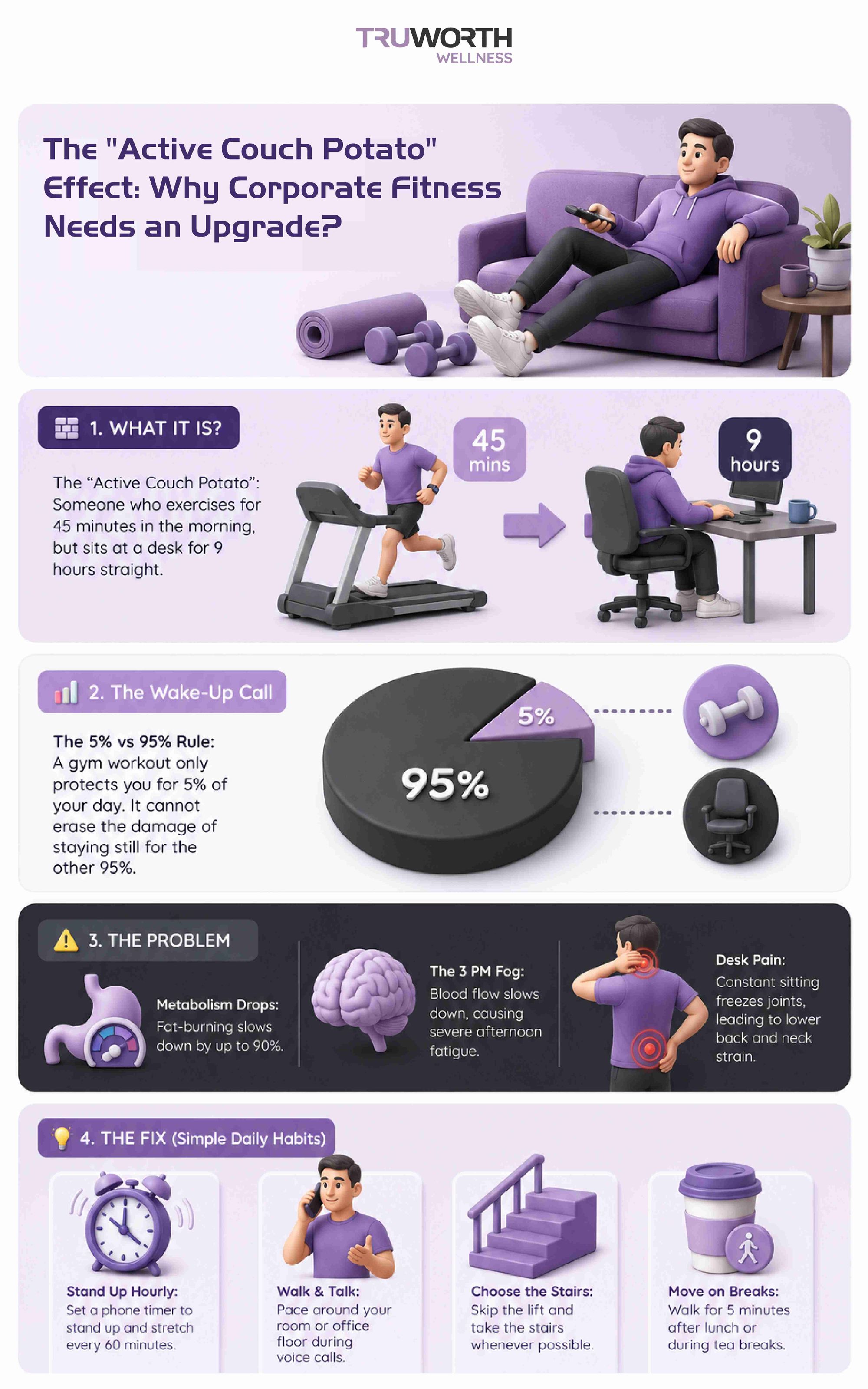
This term describes an employee who works out hard at the gym or goes for a run for 45 minutes in the morning, but then transitions into a completely still state, sitting in an office chair for the next 8 to 10 hours of the workday.
Even though these employees are trying their absolute best to stay fit, sitting completely still for too long puts their health at risk. For HR leaders, understanding this health gap is the key to turning standard corporate wellness benefits into real, daily workplace energy.
The 1-Hour Fitness Illusion: What Happens to Our Bodies?
For a very long time, the standard rule of fitness was simple: if you exercise for 30 to 60 minutes a day, you are perfectly healthy.
This is an illusion. While it does help a bit but a morning workout does not erase the negative effects of sitting still for the rest of the day. The human body is like an engine that is designed to move regularly throughout the day, not just once in the morning.
When an employee sits at a desk for hours without standing up, their body goes into a dangerous "sleep mode." Here is exactly what happens inside the body:
- The Fat-Burning Engine Shuts Down: When we sit down and stop moving our large leg muscles, the body stops producing a natural enzyme called lipoprotein lipase. This enzyme is responsible for breaking down fats and sugars in our blood. Instead of burning food for fuel, the body begins to store it as fat.
- Poor Blood Flow and Circulation: Gravity causes blood to pool in the lower legs when we sit still for hours. This makes the legs feel heavy, stiff, and tired. It also slows down the flow of fresh oxygen and blood to the brain. This lack of oxygen is the direct cause of that familiar, foggy feeling people get in the afternoon.
- Energy and Blood Sugar Crashes: Inactive muscles do not absorb glucose (sugar) from the blood effectively. Because the muscles are resting, sugar stays in the bloodstream longer. This creates blood sugar spikes followed by sudden crashes, which leaves employees feeling drained, sleepy, and unable to focus.
Simply put, an employee might be highly active for 5% of their day at the gym, but totally still for the other 95% at their desk. When this happens, companies still face high health insurance claims, frequent medical leaves, and low daily energy levels.
Must Check: Beat Your Seat!! Tips To Avoid Sedentary Workplace
The Hidden Business Costs of Sitting Too Long
When employees sit too much, it does not just hurt their physical health; it hurts company productivity and business metrics every single day in three distinct ways:
1. The 3 PM Energy Slump
We often blame the afternoon slump on a heavy lunch. However, occupational health data shows it is usually caused by a stalled metabolism from sitting too long. When energy drops, the speed of work slows down, errors increase, and creative problem-solving drops significantly.
 Truworth Wellness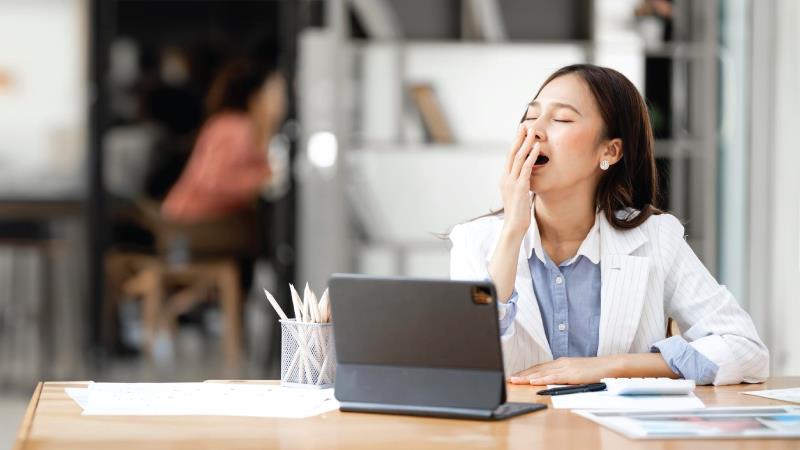
2. Daily Body Aches and Distractions
Stiff necks, lower back pain, and tight shoulders act as constant distractions for office workers. When an employee is in physical discomfort, they cannot focus entirely on their tasks. This leads to "presenteeism"; a state where an employee is physically sitting at their desk but mentally checked out due to physical fatigue.
Is Your Sedentary Lifestyle Killing You Silently? Check Here
3. Low Benefit Utilization Rates
Traditional gym benefits are excellent, but they are usually utilized by only 15% to 20% of an office workforce. These are the individuals who are already highly motivated to stay fit. The remaining majority of employees often find the gym too difficult, intimidating, or time-consuming to fit into their busy family schedules. This means a large portion of a company's health budget is under-indexing on population-wide health improvements.
How To Go Beyond "The Typical 5" Types Of Wellness Programs For Better Utilization?
The New Challenge: Remote and Hybrid Workers
The Active Couch Potato problem has become even more severe with the rise of remote and hybrid work. Employees working from home face an even higher risk of physical inactivity than those in a traditional office.
In a physical office, employees naturally move. They walk from the parking lot, take the stairs to different floors, walk to a colleague's desk to speak with them, and head out to lunch.
At home, these natural movements disappear completely. A remote worker might wake up, walk five steps to their laptop, and sit in the exact same spot all day long. They do not even have to walk to a meeting room because everything happens on video calls. For these employees, a morning gym session is their only movement of the day, making them prime candidates for desk fatigue and metabolic slowdowns.
Must Read: Top 10 Wellness Program Features That Work In A Hybrid Office
Don't Stop the Gym. Add Micro-Movements Instead
Pointing out this health gap does not mean gym benefits are a waste of corporate funds. Gym workouts are absolutely essential for long-term heart health, building muscle strength, bone density, and reducing mental stress.
The goal for human resource teams should never be to stop gym programs, but rather to make them more valuable and complete.
To get the absolute best return on your employee health budget, a structured gym session must be paired with daily micro-movements. In the scientific community, this is known as Non-Exercise Activity Thermogenesis (NEAT). It simply means the energy we spend doing everyday actions outside of sports and gym workouts. This includes simple habits like walking while talking on the phone, standing up to stretch during a break, or choosing the stairs instead of the elevator.
By blending morning workouts with small, natural movements during the working hours, you create a high-energy office culture where health benefits grow naturally.
A Step-by-Step Plan for HR Teams to Create a Moving Culture
Changing corporate habits does not have to be difficult, complicated, or expensive. HR teams can implement a few simple, low-friction strategies right now to keep their workforce moving:
- Establish the 50-Minute Meeting Rule: Change standard one-hour calendar invitations to 50 minutes, and half-hour meetings to 25 minutes. Explicitly instruct employees to use the remaining 5 to 10 minutes to stand up, roll their shoulders, stretch their legs, or walk around the room before starting their next digital task.
- Launch Fun, Team-Based Step Challenges: Human beings are social creatures who love friendly competition. Create cross-departmental walking challenges where teams compete to hit collective step milestones during office hours. This turns a simple casual chat or a coffee break into a healthy team objective.
- Normalize Standing and Pacing Culture: Encourage managers to lead by example. Let teams know that it is completely acceptable to turn off their cameras during internal voice-only calls so they can pace around their office or home while listening and contributing.
- Send Helpful, Automated Reminders: When employees are deeply focused on tight project deadlines, they experience "screen lock"—they completely forget to change their posture for hours. Simple, automated mobile notifications like "Time for a 2-minute desk stretch to relax your lower back!" can help them break the sitting habit without breaking their workflow.
How Truworth Wellness Connects the Dots?
At Truworth Wellness, we believe that true, sustainable health does not happen in just one hour a day. It happens through small, consistent choices made every single hour. Gym discounts and physical fitness benefits are excellent, vital starting blocks for a healthy lifestyle.
Our digital platform, The Wellness Corner, acts as the essential bridge that connects those fitness blocks directly to the corporate office desk.
Through our user-friendly mobile application, we make daily movement simple and engaging. We track everyday steps, launch exciting team-wide fitness challenges, offer rewards for healthy habits, and send gentle, automated behavioral reminders directly to your employees' smartphones.
We do not interrupt their busy work schedules. Instead, we give them the micro-tools they need to stay active, alert, and energized while they work.
By connecting high-level gym fitness with daily digital habits, we help your workforce transition from being "active couch potatoes" to truly healthy, vibrant, and high-energy team members. This dual approach protects your wellness budget, reduces insurance claims, and builds a happy, highly productive company culture. Contact us to know more.