If You Experience A Panic Attack At Work, Read This

A racing heart. Tight chest. Shaky hands. The sudden fear that something is terribly wrong, right in the middle of a meeting or workday.
Panic attacks do not announce themselves politely, and they do not wait for convenient moments. For many professionals, the workplace becomes one of the most frightening places to experience one, not because the panic is stronger, but because the fear of being noticed, judged, or misunderstood adds another layer of distress.
Many employees worry about appearing weak, unprofessional, or incapable. Some fear that one visible moment of panic could undo years of credibility. This pressure often makes panic attacks feel more intense at work than anywhere else.
The good news is that panic attacks are not dangerous, not a sign of weakness, and not something you are powerless against.
With the right techniques, professionals can move from panic to calm quietly, quickly, and without having to step away from their responsibilities for long.
Also Read: How To Manage The Most Panicking Situations At Work?
Understanding Panic Attacks In The Workplace
A panic attack is a sudden surge of intense fear or discomfort that peaks within minutes. It is the body’s fight or flight response activating without a real external threat.
Common symptoms include a rapid or pounding heartbeat, shortness of breath, dizziness, sweating, trembling, nausea, or a feeling of losing control. Some people also experience a sense of unreality or fear that they might collapse or embarrass themselves.
In high-pressure work environments, long hours, constant digital connectivity, performance targets, and limited recovery time can increase nervous system overload. Panic attacks often affect high-performing professionals who are conscientious, driven, and used to pushing through stress.
Importantly, a panic attack is not a heart problem, not a mental breakdown, and not a personal failure. It is a temporary nervous system response.
The key to recovery is learning how to send safety signals back to the body.
The First Rule: Do Not Fight The Panic
One of the most common mistakes professionals make is trying to suppress or fight a panic attack.
When you tell yourself to “stop this immediately” or “get control now,” the body interprets this urgency as further danger. Fear increases adrenaline, and adrenaline fuels the panic cycle.
Instead of resisting, the goal is to slow down, ground yourself, and gently reassure your nervous system that you are safe.
Acceptance does not mean liking the experience. It simply means allowing it to pass without adding fear to it.
The 60-Second Breathing Reset
Breathing is one of the fastest ways to calm panic, especially in a workplace setting where discretion matters.
When panic begins, breathing becomes rapid and shallow, which signals danger to the brain. Slowing the breath helps reverse this response.
How To Do It?
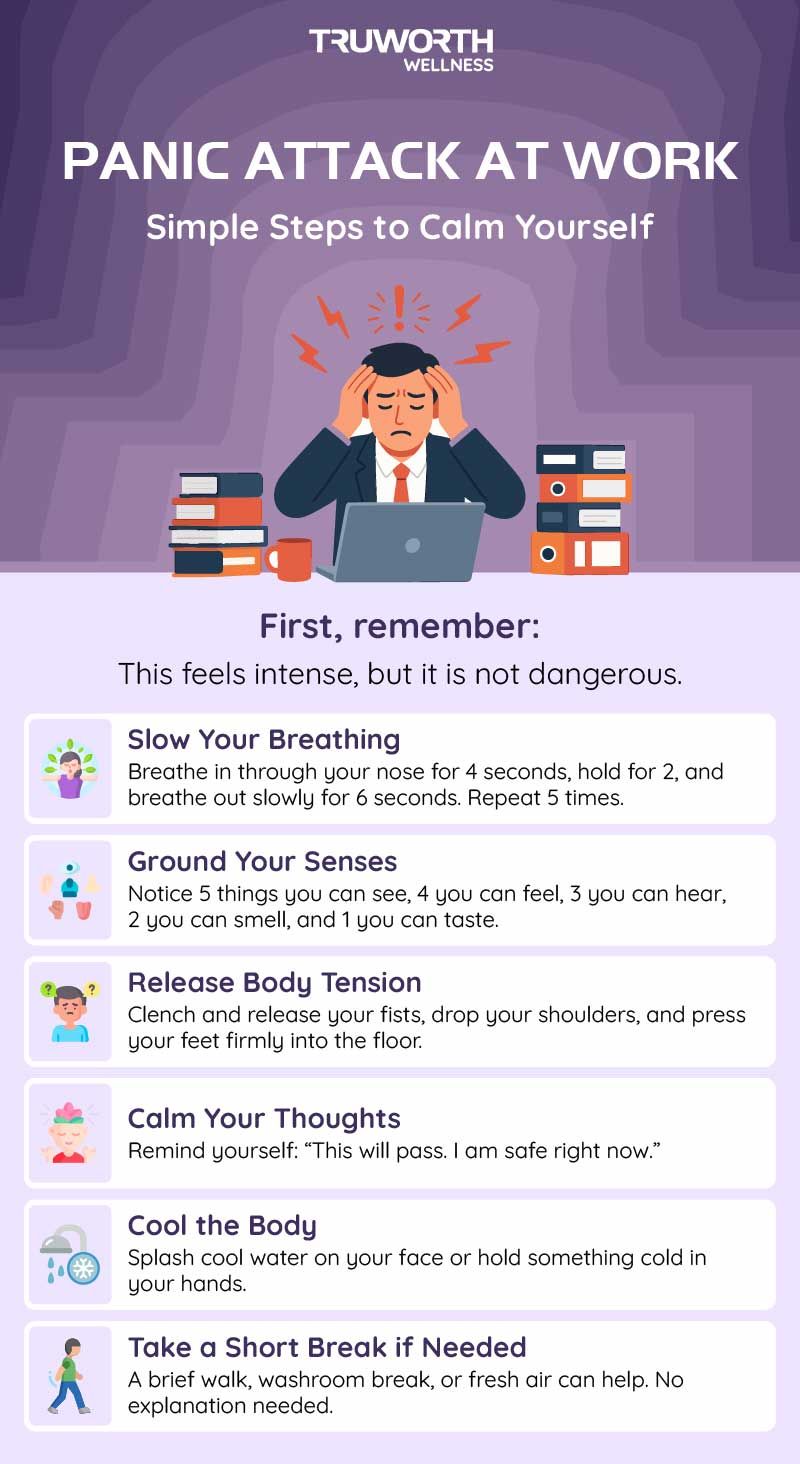
Inhale slowly through your nose for four seconds. Hold the breath gently for two seconds. Exhale through your mouth for six seconds. Repeat this cycle five to six times.
This technique can be done while sitting at your desk, during a meeting, or even while listening to someone speak.
Longer exhalations activate the parasympathetic nervous system, which is responsible for rest and recovery. Many people notice a reduction in panic symptoms within a few minutes.
Try These: Deep Breathing Exercises You Can Easily Do In The Office
The “Name 5 Things” Grounding Technique
Panic pulls the mind into catastrophic thinking. Grounding techniques bring attention back to the present moment.
Silently identify five things you can see around you, four things you can physically feel, three things you can hear, two things you can smell, and one thing you can taste.
This exercise can be done internally without any visible movement, making it ideal for professional settings.
Grounding works because it shifts the brain away from imagined threats and back into sensory awareness, reducing emotional intensity.
Muscle Release For Hidden Panic
Panic is not only experienced in the mind. It also gets stored in the body as tension.
Subtle muscle release can help discharge this excess energy.
Clench your fists tightly for five seconds, then release slowly. Lift your shoulders toward your ears, hold briefly, and let them drop. Press your feet firmly into the floor and notice the contact.
These small movements tell the nervous system that the body is no longer preparing for danger.
The Reassurance Script Using Internal Self-Talk
What you say to yourself during a panic attack can either shorten or prolong it.
Helpful phrases include:
- “This is uncomfortable, not dangerous.”
- “My body is reacting to stress, and it will settle.”
- “I have experienced this before, and it passed.”
Avoid self-criticism or urgency-based thoughts like “This cannot be happening right now” or “Everyone will notice.”
Calm and compassionate self-talk reduces fear, which in turn reduces adrenaline.
Temperature Reset As A Quick Nervous System Tool
If you have access to water or a cool object, temperature changes can help regulate panic.
Splashing cool water on your face, holding a cold bottle, or placing something cool on your wrists or neck can activate the vagus nerve.
This physiological response helps slow the heart rate and bring the body out of panic mode more quickly.
Stepping Away Without Explanation
If panic feels overwhelming, it is okay to step away briefly.
A short walk, a visit to the washroom, or a few minutes of fresh air can make a significant difference. You do not owe anyone a detailed explanation. A simple “I will be right back” is enough.
Giving yourself permission to take space can prevent panic from escalating further.
How Long Does A Panic Attack Last?
Most panic attacks peak within ten minutes and gradually subside within twenty to thirty minutes. Knowing this is reassuring during the episode.
Reminding yourself that panic has a beginning, middle, and end can reduce fear and help you stay grounded while it passes.
After The Panic Passes: What Not To Do?
Once the symptoms ease, many professionals engage in harsh self-judgment or repeatedly replay the episode in their minds. This often increases anxiety about future attacks.
Instead, focus on basic recovery. Drink water, eat something light if needed, and return to your routine at a comfortable pace.
Treating panic as a temporary nervous system response rather than a failure helps confidence return faster.
Also Read: How Do We Truly Desire A Workplace To Be? (If There Were No Judgments?)
Can Panic Attacks Be Prevented At Work?
While panic attacks cannot always be prevented, their frequency and intensity can be reduced with supportive habits.
Regular breathing practices, realistic workloads, adequate breaks, reduced caffeine intake, sufficient sleep, and emotional regulation training all contribute to nervous system resilience.
Workplaces that normalise mental health conversations and provide emotional fitness tools create environments where professionals feel safer and more supported.
When To Seek Professional Support?
If panic attacks become frequent, begin affecting confidence or performance, or lead to avoidance of work situations, professional support can be helpful.
Guidance from a qualified mental health professional can help identify triggers, build coping strategies, and restore a sense of control.
Final Thoughts: Panic Is Not A Career Weakness
Panic attacks do not define your capability, leadership, or professionalism.
They are signals from an overwhelmed nervous system, not indicators of failure.
With the right tools and supportive environments, professionals can move from panic to calm without disruption, without shame, and without fear.
Building emotional resilience at work is not just self-care. It is a vital professional skill.