These Foods Can Put You In A Sleepy Mood At Work

Avoid These If Possible for Better Focus & Energy
Ever noticed how some days you feel mentally sharp at work, while on other days your eyelids feel heavier by mid-afternoon, despite getting enough sleep the night before?
Surprisingly, the culprit isn’t always workload or stress. Often, it’s what you eat during the workday.
In modern corporate environments, employees often juggle long screen hours, back-to-back meetings, and tight deadlines. When food choices unintentionally drain energy, the impact compounds across the workday. What seems like “normal tiredness” may actually be nutrition-driven fatigue.
Food doesn’t just fuel the body; it directly affects alertness, brain chemistry, blood sugar levels, and energy crashes. Certain foods, especially those commonly consumed at breakfast, lunch, or during office snacks, can quietly push your body into a rest-and-digest mode, making concentration harder and productivity drop.
Understanding this connection empowers employees to make small but meaningful changes, without extreme dieting or rigid rules.
Let’s look at the common foods that can make employees feel sleepy at work, why this happens, and how organizations can encourage smarter food choices without being restrictive.
Also Read: Why We Feel Sleepy After Lunch & How To Beat It Without More Coffee?
Why Do Some Foods Make You Feel Sleepy?
Sleepiness after eating (often called the “food coma”) happens due to a mix of factors:
- Sudden spikes and drops in blood sugar
- Increased production of serotonin and melatonin
- Reduced blood flow to the brain as digestion ramps up
- Heavy or slow-digesting foods taxing the digestive system
From a biological perspective, the body prioritizes digestion when faced with heavy or imbalanced meals. This is useful during rest, but counterproductive during cognitively demanding work hours.
At work, this translates into:
- Slower thinking
- Reduced focus
- Low motivation
- Increased errors
The urge to “just sit quietly” instead of engaging
Over time, repeated episodes of food-induced fatigue can also affect confidence, engagement, and perceived performance, even when the employee is capable and motivated.
Now let’s break down the foods that commonly trigger this state.
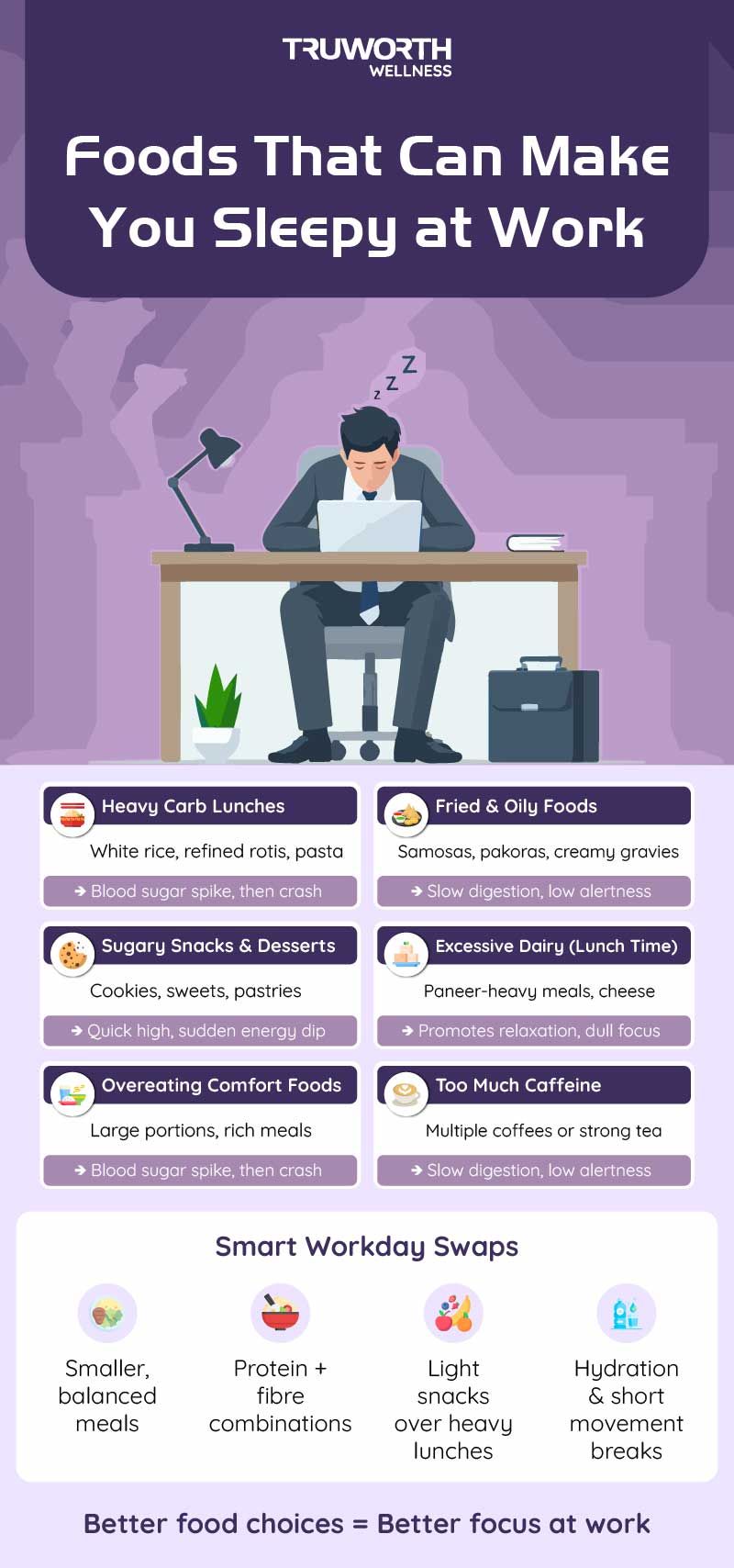
Heavy, Carb-Loaded Lunches
White rice, refined rotis, pasta, pizza, burgers, and large portions of potatoes are staples in many office lunches, especially in Indian corporate settings.
Why they cause sleepiness?
Refined carbohydrates cause a rapid rise in blood sugar, followed by a sharp crash. This crash signals fatigue, making the brain sluggish.
In many cultures, lunch is the heaviest meal of the day. While culturally comforting, oversized portions of refined carbs during work hours can significantly reduce afternoon productivity.
What it looks like at work?
- Post-lunch yawning
- Difficulty focusing in meetings
- Low responsiveness in the second half of the day
Smarter swap:
- Smaller portions of carbs
- Pair carbs with protein and fibre (dal, vegetables, paneer, eggs)
Fried & Oily Foods
Samosas, pakoras, fried snacks, chips, pooris, and creamy gravies are comfort foods, but not work-friendly fuels.
Why they cause sleepiness?
Fats take longer to digest. This diverts blood flow to the gut and away from the brain, triggering lethargy.
In office environments where movement is already limited, heavy oily foods further slow down metabolism and mental alertness.
Also Read: 10 Easy Ways To Rev Up Your Metabolism
What it looks like at work?
- Heavy feeling in the body
- Slower reaction time
- Reduced willingness to engage
Smarter swap:
- Roasted snacks
- Steamed or grilled options
- Light gravies over creamy ones
Sugary Snacks & Desserts
Cookies, pastries, sweets, chocolates, mithai, sweetened beverages, and festive treats are common in offices, especially during celebrations.
Why they cause sleepiness?
Sugar creates a quick energy high, followed by a sudden insulin spike and energy crash. This leads to fatigue and brain fog.
While these foods often feel like a reward or stress reliever, frequent sugar crashes can disrupt concentration and mood stability throughout the day.
What it looks like at work?
- Short burst of energy
- Followed by irritability and exhaustion
- Strong craving for more sugar or caffeine
Smarter swap:
- Fruits with nuts
- Dark chocolate in small quantities
- Yogurt with seeds
Also Read: Calm Your Sugar Craving With These 5 Healthy Foods
Excessive Dairy (Especially At Lunch)
Paneer-heavy meals, creamy curries, cheese-loaded sandwiches, or large quantities of curd can contribute to sluggishness.
Why it causes sleepiness?
Dairy contains tryptophan, an amino acid that supports serotonin and melatonin production, chemicals associated with relaxation and sleep.
While dairy has nutritional value, portion size and timing matter, especially during active work hours.
What it looks like at work?
- Calm but overly relaxed state
- Reduced mental sharpness
Smarter swap:
- Moderate portions
- Balance dairy with vegetables and protein
Alcohol-Like Effects From Certain Comfort Foods
While alcohol is usually avoided during work hours, certain foods mimic its relaxing effect, like rich desserts, heavy gravies, and oversized meals.
Why it causes sleepiness?
These foods activate the parasympathetic nervous system, putting the body in “rest mode.”
This response is ideal for recovery and relaxation, but misaligned with tasks requiring focus, collaboration, and quick thinking.
What it looks like at work?
- Low drive
- Passive participation
- Reduced initiative
Smarter swap:
- Smaller, balanced meals
- Mindful portion control
Too Much Caffeine (Yes, Really)
Multiple cups of coffee or strong tea may feel necessary, but excess caffeine backfires.
Why It causes sleepiness?
Caffeine blocks adenosine temporarily. Once it wears off, fatigue hits harder, often causing an energy crash.
In some cases, over-caffeination can also increase anxiety, disrupt sleep later at night, and worsen next-day fatigue.
What It Looks Like At work?
- Afternoon slump
- Anxiety followed by exhaustion
- Dependency cycle
Smarter Swaps
- Limit caffeine after early afternoon
- Hydration, movement breaks, sunlight exposure
The Workplace Impact Of Food-Induced Sleepiness
When employees consistently consume energy-draining foods at work, organizations may notice:
- Lower productivity post-lunch
- Reduced engagement in meetings
- Increased errors and slower decision-making
- Higher dependence on stimulants
- Perceived “low motivation” that is actually physiological
This isn’t a discipline issue, it’s a wellness design gap.
Often, employees are trying their best, but the environment does not support sustained energy.
Also Read: The Hidden Link Between Employee Productivity And Gut Health
How Organizations Can Support Smarter Eating (Without Policing?)
Forward-thinking companies don’t tell employees what to eat, they create awareness and better options.
Supportive approaches respect autonomy while gently nudging healthier decisions.
Some effective strategies include:
- Cafeteria nudges (lighter meals highlighted)
- Wellness communication on food-energy connection
- Lunch-and-learn sessions on nutrition and focus
- Digital wellness tips via apps or intranet
- Encouraging mindful eating breaks
When employees understand how food affects their workday, choices naturally improve.
Final Thought: Food Is A Productivity Tool
Sleepiness at work isn’t always about poor sleep or low motivation. Often, it’s about fueling the brain incorrectly.
Helping employees recognize which foods drain energy, and what to choose instead, is a simple yet powerful step toward:
- Better focus
- Improved morale
- Sustainable performance
- Healthier workdays
Small changes in daily eating habits can create noticeable shifts in energy, clarity, and engagement.
How Truworth Wellness Can Help?
At Truworth Wellness, we help organizations go beyond generic nutrition advice. Our programs focus on:
- Practical, culturally relevant food education
- Workplace-specific energy management
- Sustainable behavior change, not restrictions
- Because when employees eat better, they don’t just feel better, they work better.