What Is A Corporate Wellness Program? Meaning, Types And Examples

In Indian workplaces, health camps, counselling helplines and fitness challenges can help employees. Value grows when they form a coordinated system people can access throughout the year. That corporate wellness program connects prevention, professional support and healthier working conditions.
For HR leaders searching for employee wellbeing programs India, the challenge is choosing support that fits workforce needs.
Short Answer
A workplace wellness program is an employer-supported approach to protecting and improving employee health through coordinated services, policies and everyday practices. The components of a corporate wellness program can include preventive checks, mental health support, fitness, nutrition and healthier work design. Different types of corporate wellness programs address different needs; effective delivery connects them with access, confidentiality and measurable goals.
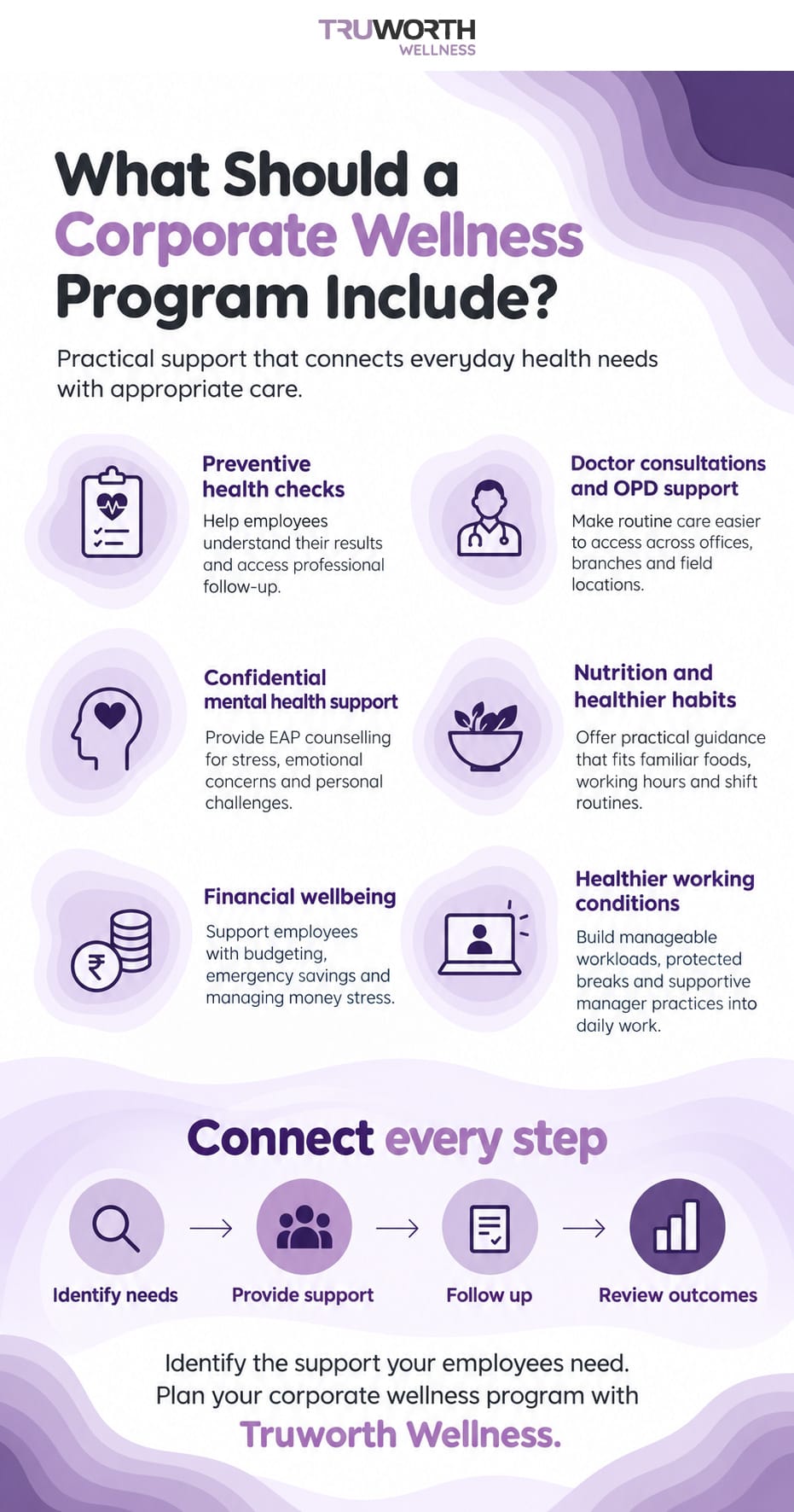
What Workplace Wellness Means?
The WHO guidelines on mental health at work recommend organisational interventions, manager training and individual support. Employers should combine accessible care with healthier working conditions. A corporate wellness program should connect services with practical changes, rather than rely on an annual activity calendar.
A workplace wellness program should make support usable. Employees need to know where to book a consultation, whether counselling is confidential and how to participate around shifts or customer commitments.
Employers also need to address conditions that undermine health, such as excessive workload or poorly designed workstations.
It also complements occupational safety measures; a yoga session cannot replace controlling a workplace hazard.
Types of Corporate Wellness Programs
The following types of corporate wellness programs offer a planning framework. Corporate wellness program categories overlap, and organisations should select services according to employee needs rather than buying every available feature.
|
Type |
What it can include? |
Practical example |
|
Physical
and preventive health |
Appropriate
screenings, movement, ergonomics and consultations |
Screening
camps across branches with explained results and follow-up |
|
Mental
and emotional health |
EAP
counselling, stress support and manager education |
Confidential
self-booking with trained professionals |
|
Nutrition
and lifestyle |
Dietitian
guidance, sleep education and tobacco cessation support |
Nutrition
coaching using familiar foods and shift routines |
|
Financial
wellbeing |
Budgeting
education, debt awareness and financial guidance |
Sessions
on salary budgeting, emergency savings and money stress |
|
Social
and organisational wellbeing |
Inclusion,
peer connection, workload reviews and recovery practices |
Predictable
handovers and protected breaks |
When comparing types of corporate wellness programs, ask which barriers each service solves. Banking and sales teams may need convenient consultations, while manufacturing employees may need multilingual access and sessions across shifts.
For employee wellbeing programs India employers can sustain, delivery should consider geography, language, disability access, digital confidence and working hours.
Components of a Corporate Wellness Program
The essential components of a corporate wellness program extend beyond the services listed in a brochure. Build a corporate wellness program around employee needs, assign an accountable owner and define how people will access support.
- Assessment and priorities: Combine voluntary employee feedback with appropriately aggregated workforce information. Identify practical gaps, such as difficult appointment access or low confidence in confidentiality. Avoid collecting sensitive information simply because a platform allows it.
- Access and communication: Explain eligibility, booking, service limits and referral options in plain language. Give remote, field and shift employees realistic ways to participate without manager approval for confidential counselling.
- Governance and follow-up: Specify provider responsibilities, consent, confidentiality limits and data handling. Offer a clear route from a screening result to qualified advice. Clinical records and counselling details should remain separate from performance management.
- Supportive working conditions: Review workload, breaks, ergonomics and manager behaviour. Employees should not have to choose between using a benefit and meeting an impossible deadline.
EAP vs Corporate Wellness Program
The EAP vs corporate wellness program distinction is mainly about scope. An Employee Assistance Program usually focuses on confidential help for personal or work-related difficulties, including assessment, short-term counselling and referrals. Broader wellness provision can also include preventive healthcare, lifestyle support and organisational practices.
Truworth Wellness describes an EAP as confidential employer-provided support for personal and work-related concerns. In India, employers should explain language options, access channels, counselling eligibility and referral arrangements clearly. Session limits, family coverage and costs beyond included services depend on the contracted offering.
When evaluating EAP vs corporate wellness program options, check whether the EAP is already included. Ask how referrals work, when professionals are available and what employees pay for care beyond covered sessions. The services can complement one another within the same employee support system.
Corporate Wellness Program Examples in Indian Companies
Verified corporate wellness program examples help illustrate what coordinated support looks like. The following examples of corporate wellness programs in Indian companies come from company publications, rather than independent evaluations of effectiveness.
Infosys HALE: Infosys’ 2025–26 ESG reporting describes Health Assessment and Lifestyle Enrichment as an integrated framework covering physical, emotional, social and digital wellbeing, with safety embedded. It lists preventive health checks, multilingual counselling and digital self-help resources.
TCS Fit4Life and TCS Cares: In its published employee wellbeing case study, TCS describes fitness activities under Fit4Life and counselling, self-help resources and webinars under TCS Cares. The account includes pandemic-era delivery, so it should not be read as a current entitlement schedule.
These corporate wellness program examples show how physical activity and emotional support can sit within wider systems. Smaller employers can borrow the principle of connected support without attempting to reproduce a large enterprise’s infrastructure.
How Corporate Wellness Programs Work?
For Indian employers, a practical approach is to:
- Assess needs, plan delivery, launch support and evaluate results.
- Map services across head offices, branches, factories and field roles.
- Check whether employees can book appointments in suitable languages and receive follow-up care near where they live or work.
- Start a corporate wellness program with two or three priorities, define a budget and choose suitable partners.
- Launch through simple communication and manager briefings.
- Review uptake and employee feedback, then adjust scheduling, service mix or communication.
Review the workplace wellness program as teams change. HR coordinates delivery, qualified professionals provide care, managers protect participation time and leadership addresses unhealthy working practices.
Benefits of Corporate Wellness Programs
The potential benefits of corporate wellness programs include easier access to care, better health awareness and support for sustainable working habits. Employers may also seek lower absence, improved employee experience and stronger retention, but results depend on programme quality and context.
India’s preventive-health needs make follow-up important. A Ministry of Health and Family Welfare update cites the 2023 ICMR-INDIAB study estimate of 10.1 crore people with diabetes in India. This is a national population estimate, not employee prevalence or proof of programme effectiveness. It supports considering appropriate screening and professional follow-up within a broader prevention strategy.
Assess the benefits of corporate wellness programs through service access, referral completion, employee trust and relevant health indicators alongside absence and retention. Participation counts alone cannot establish financial return.
How Truworth Wellness Can Help?
Truworth Wellness’ corporate offering covers employee health benefits, EAP services and wellness engagement through events, challenges and its platform. Its digital platform describes assessments, wellness trackers, guided programmes and consultations across chat, audio and video.
For organisations comparing employee wellbeing programs India, this offers a way to discuss connected access rather than separate campaigns. Tailor your corporate wellness program around the service mix, professional qualifications, coverage, reporting and confidentiality before launch. Availability and eligibility should be confirmed for the specific contract.
Connect with Truworth Wellness to explore a workforce wellness approach that connects prevention, confidential support and practical daily habits with your organisation’s priorities.
Frequently Asked Questions
What does a corporate wellness program include?
The components of a corporate wellness program commonly include needs assessment, preventive care, mental health support, lifestyle guidance, communication and evaluation. The mix should reflect workforce needs and available resources.
What are useful corporate wellness program examples?
Examples include health checks with follow-up, confidential counselling, nutrition coaching and ergonomic improvements. Combine relevant types of corporate wellness programs so employees can move easily between awareness, advice and care.
What is the difference between employee wellness and employee wellbeing?
Usage varies. Wellness often describes health-related activities and habits; wellbeing can describe the broader experience of physical, mental, social and financial health, including working conditions. Define both clearly when setting programme goals.
Is a corporate wellness program worth it?
It can be, when it addresses real needs and employees trust and use it. Evaluate the benefits of corporate wellness programs against agreed outcomes and costs rather than assuming immediate savings.
How should employers compare EAP vs corporate wellness program offerings?
Check scope, counselling limits, referrals, confidentiality and included preventive services. An EAP may already form part of a wider offering, so compare actual coverage rather than product labels.
What suits a corporate wellness program for small businesses India?
When comparing employee wellbeing programs India, smaller employers can start with confidential support, selected preventive services and healthier work practices. Choose affordable priorities, protect participation time and expand after reviewing employee feedback.