Returning After Mental Health Leave: Is Your Organisation Prepared Beyond The Welcome-Back Email?


Blog Briefing: The Short Answer
Also Read: Mental Health Stigma At The Workplace In India
Why The First Day Back Is Only The Beginning?
A welcome-back email can make an employee feel remembered, but it cannot resolve the uncertainty that may come with returning after a period of mental health leave. The employee may be wondering whether colleagues will ask personal questions, whether their workload has piled up, or whether they can manage the pace of work again.
Returning to work after burnout can be especially challenging when the conditions that contributed to the absence have not changed. Long hours, unclear expectations, excessive workload, or limited control can recreate the same pressures.
A supportive return to work after mental health leave should therefore be treated as a transition, not a single date on the calendar. The organisation needs to consider the employee's role, current capacity, work environment, and any adjustments that have been mutually agreed.
Start With A Conversation, Not Assumptions
Before the employee's first day, arrange a private conversation with them. Ask what would make the transition manageable and what information they are comfortable sharing with their manager or team. Do not ask for unnecessary details about their diagnosis, treatment, or personal circumstances.
When considering how to support an employee returning from mental health leave, begin with practical questions:
- What would help you feel prepared for your first week?
- Are there tasks or situations you would prefer to build up to gradually?
- How would you like your manager to check in with you?
- Is there anything the team needs to know to support the transition?
If you are unsure what to say to an employee returning from mental health leave, keep it simple: "It is good to have you back. We can discuss what support would make the next few weeks manageable, and you do not need to share anything you would rather keep private."
This approach makes the return to work after mental health leave more collaborative and helps prevent assumptions from shaping the employee's experience.
Also Read - Mental Health Games: 12 Workplace Activities For Well-Being In The Indian Workplace
Build A Return-To-Work Plan That Can Adapt
A written employee return to work plan gives both the employee and manager a shared understanding of expectations. It should be individualised, reviewed regularly, and adjusted if the employee's needs or work demands change.
Depending on the role and circumstances, reasonable adjustments may include:
- A temporary reduction in workload or fewer high-pressure deadlines.
- Flexible start and finish times, or hybrid work where practical.
- Clear priorities and fewer simultaneous projects.
- Additional breaks or protected time for appointments.
- A gradual increase in hours or responsibilities, where appropriate.
A phased return to work plan after burnout may begin with reduced hours or a smaller set of responsibilities, followed by gradual increases agreed with the employee.
It should not be treated as a fixed formula or a test of commitment. Any plan should reflect the person's circumstances and, where relevant, professional advice.
These steps support employee reintegration after medical leave by making the transition structured without expecting immediate full capacity. A thoughtful return to work after mental health leave also includes a review date, a named point of contact, and a clear way to raise concerns.

Help Managers Get The Conversation Right
Managers often shape the employee's day-to-day experience more than any policy document. A manager's guide to employee return to work should therefore include practical training on privacy, empathetic communication, workload planning, and recognising when to refer someone to professional support.
Managers should avoid comments such as "Are you completely fine now?" or "We all get stressed." These can minimise the employee's experience or create pressure to appear fully recovered.
Instead, ask what is working, clarify priorities, and discuss adjustments without repeatedly asking for personal health updates. If performance concerns arise, address them fairly and separately from assumptions about the employee's mental health.
When considering how should managers handle an employee's return after stress leave, the answer is to combine empathy with clarity. Agree on achievable goals, document work-related arrangements, and make check-ins supportive rather than intrusive.
A successful return to work after mental health leave depends on managers being approachable without becoming overly involved in an employee's personal recovery.
 Truworth Wellness

Make Workplace Support Visible And Accessible
Workplace mental health support should not begin and end with an employee's return. Organisations can reduce the risk of recurring strain by reviewing workload distribution, manager behaviour, role clarity, team culture, and access to support.
An employee assistance program for return to work can offer confidential counselling, guidance, or referrals, depending on the services available. Make sure employees know how to access it and understand its confidentiality limits. An EAP should complement, not replace, practical changes to work conditions.
Supporting employees returning from mental health leave also means protecting their privacy. Share only the information necessary to implement agreed adjustments, and obtain the employee's consent before communicating personal details to colleagues.
A sustainable return to work after mental health leave is more likely when support is part of everyday workplace practice, rather than a special arrangement that disappears after a few weeks.
What Should An Indian Employer Know?
Employers often ask: does India have mental health leave law? There is no single, universal central leave category that guarantees a separate number of paid days specifically for mental health to every employee. Leave entitlements may arise through applicable state Shops and Establishments legislation, sector-specific rules, employment terms, and an organisation's sick-leave or medical-leave policy.
The Mental Healthcare Act, 2017 protects rights relating to mental healthcare and treatment, but it should not be interpreted as creating a universal workplace mental-health-leave entitlement. Employers should review the laws applicable to their location and workforce and seek qualified legal advice before drafting or changing a return to work policy mental health provision.
A clear mental health leave policy India framework can explain how employees request leave, what documentation may be needed, how confidentiality is maintained, and how a return plan is agreed. It should be consistent, non-stigmatising, and aligned with applicable law.
For HR teams, a return to work after mental health leave should be guided by both the organisation's policies and the employee's individual circumstances, rather than assumptions about what recovery should look like.
Also Read - Mental Health Missteps: Common Mistakes Companies Make & How To Fix Them?
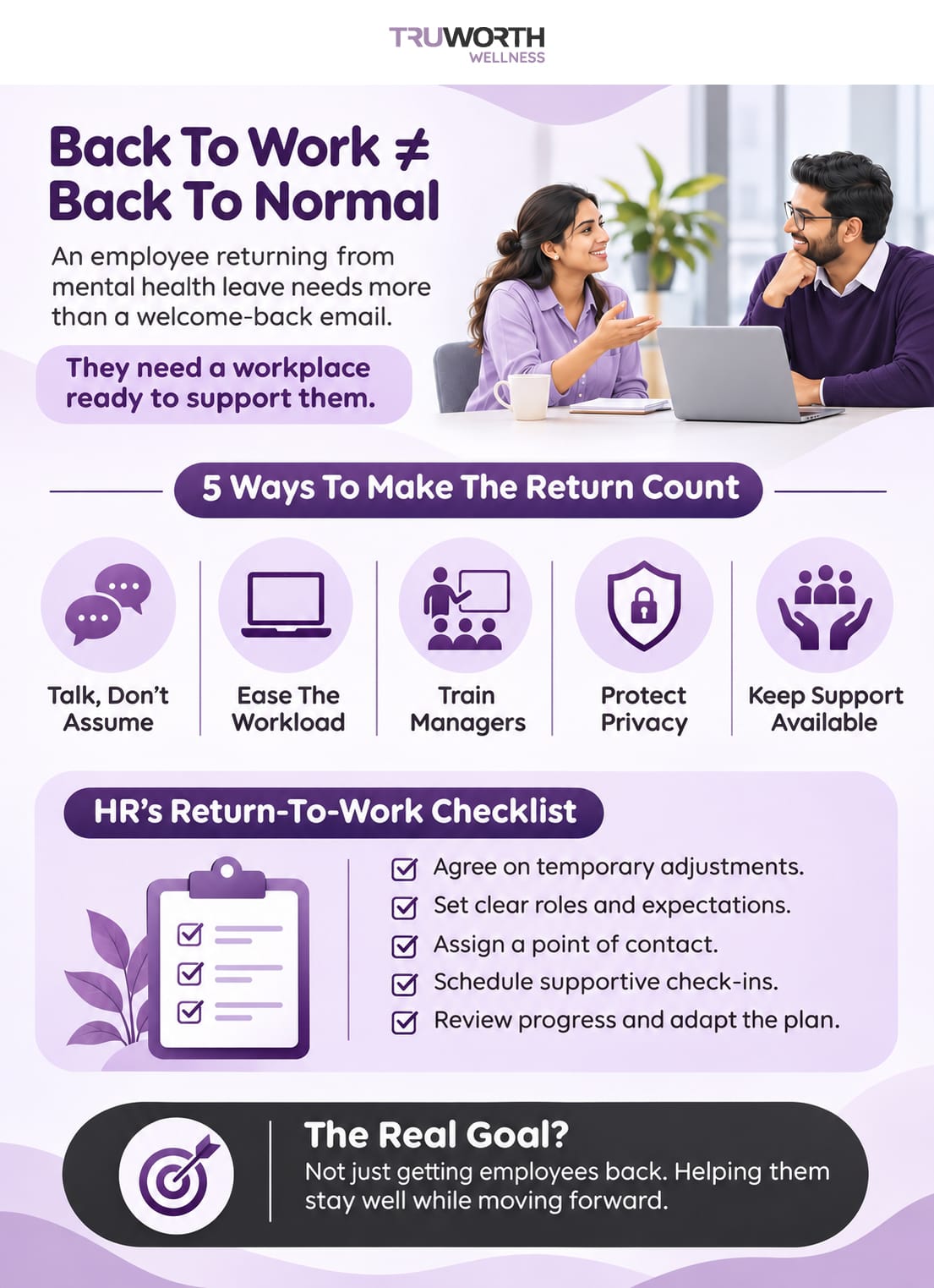
A Practical Return-To-Work Checklist
Use the following checklist to guide the transition back to work after mental health leave:
- Arrange a confidential pre-return conversation.
- Confirm the employee's preferred communication and privacy boundaries.
- Agree on duties, priorities, hours, and temporary adjustments.
- Establish a point of contact within HR or management for any concerns.
- Explain available support services and how to access them.
- Schedule check-ins and a review of the plan.
- Revisit workload and adjustments instead of assuming the first plan will fit.
The checklist should guide a conversation, not become another administrative hurdle. The employee should have a voice in shaping the plan. Remember, a successful return to work after mental health leave is about sustainable participation, not simply completing a checklist.
Make Wellbeing Part Of The Workday With Truworth Wellness
A supportive return is not measured by how quickly an employee resumes their old routine. It is measured by whether they can contribute without being pushed back into the conditions that affected their wellbeing. Truworth Wellness helps organisations build healthier workplace cultures through employee wellbeing initiatives, expert-led support, and practical wellness solutions. Explore how a more thoughtful approach to workplace wellbeing can help employees and organisations move forward together.
Frequently Asked Questions
1. Should an employee disclose their diagnosis before returning?
Not automatically. Employers should request only information necessary and lawful for managing work arrangements, while respecting privacy and applicable requirements.
2. How long should a phased return last?
There is no universal duration. It should be agreed based on the employee's circumstances, role requirements, and any relevant professional guidance, then reviewed regularly.
3. Who should manage the return-to-work plan?
Usually HR and the line manager coordinate it with the employee. Occupational health or an external professional may contribute where appropriate and with consent.